shift notes 1.1
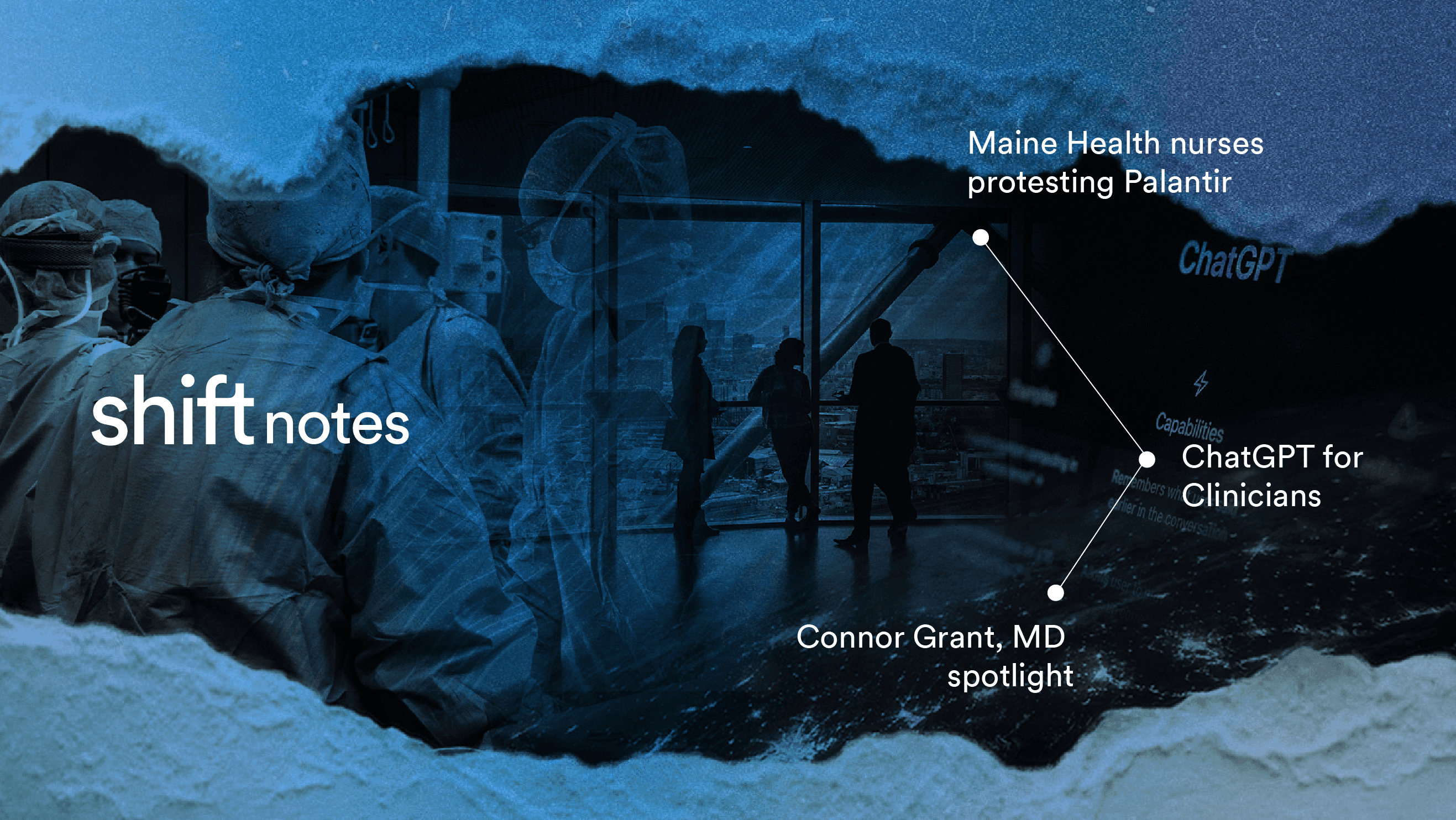
a weekly read that catches you up on all things healthcare, tech, workforce, + more // brought to you by the ShiftOS team
Welcome back, everyone! To ShiftNotes, a weekly newsletter brought to you by the ShiftOS team.
Go ahead, and poke a little fun at the weekly note; given that we have not been posting this weekly. Yeah, that’s our bad. But, if you’re into 3rd and 4th chances, we promise we’ll make this worth your time.
What you can expect from us going forward: something totally different, not boring to read, and what is happening at the intersections of AI, technology, healthcare, workforce innovation + news.
We’ll cover what’s going on right now, and can assure you that if you give this a go, and read it weekly that you’ll sound 100x smarter to all of your friends and family or we’ll give you a 100% refund on what you pay to read this… oh wait.
One more assurance is that a human fully writes this newsletter. So you can rest easy knowing that you’re not wasting your time reading AI-slop. That should get at least a measly subscribe, please sir. Come on!!
Anyways, let’s kick this week off with a really interesting start.
The Maine Health Nurses are protesting against Palantir!?
Given that we’re technically in competition with one of Palatnir’s products, we couldn’t have dreamt up something better. Jk again. Okay, no more jokes.
Here’s what is going on fr 🧐: Maine Health utilizes a healthcare product of Palantir’s.
In case you didn’t know, Palantir has been slyly embedding themselves into healthcare over the last few years. One of their core offerings in their ‘Hospital AI-Native Operating System’ is a scheduling product used specifically for nurses. It manages day-of staffing, scheduling, forecasting, labor allocation… the whole works; or so it seems.
We’ve internally heard some grievances about the Palantir scheduling system, mostly being very-high in cost, and not being super thrilled about it’s actual capabilities. But, this is a whole new perspective coming out of Maine Health. Nurses are upset because the company, which everyone is aware is really a mass-surveillance product, has been assisting with ICE raids. Several local media outlets have covered the nurses protesting ICE and Palantir outside of their hospital locations, citing that they have undocumented patients, colleagues, and staff that they’re concerned about, and don’t want a healthcare product conducting surveillance in finding undocumented workers when these are people in their community that they deeply care for.
Honestly? Based.
ChatGPT for Clinicians is free for U.S.-based, and licensed providers.
Thank god that Dr. Tony is going to be able to concurrently diagnose that super-rare amazonian-rainforest based autoimmune disease while chat finds recs for ‘I’m super sorry’ gifts because he missed him and his wife’s 30th wedding anniversary. Patient and wife satisfaction scores go hand in hand. The evidence is peer reviewed.
But actually, more clinicians than ever before are relying on AI in their daily workflows (as they should) and are in increasingly precarious positions having to balance administrative duties that continue their scope creep, pressure from the health-systems to over-perform on patient satisfaction, and patients that also have access to AI tools and come in with their own conclusions. From OpenAI’s own press release on the tool on April 22nd: “We’re introducing ChatGPT for Clinicians, a version of ChatGPT designed to support clinical tasks like documentation and medical research so clinicians can focus on delivering high-quality patient care. We’re making it free for any verified physician, NP, PA, or pharmacist, starting in the U.S.” The move to make it free is a win. Because In a 2026 survey by the American Medical Association, physician use of AI is now at an all-time high, with 72% of physicians reporting they now use AI in clinical practice, up from 48% last year.
How will this start to affect diagnosis of patients, and continuous care? We’ll all see over the next 24 months but, our bet is on overall positive. According to a recent study done by Harvard with Beth Israel Deaconess’ emergency medical center, AI caught the right diagnosis 67% of the time vs their human counterparts at 50-55%. Someone get a Polymarket bet going on what these numbers will be hitting at in May 2027, please!
“Mom, Dad, you’ll never believe how the ShiftOS newsletter helped me pay off your retirement home in Tuscan”
INTERVIEW SPOTLIGHT
Introducing: Connor. Grant. Medical. Doctor.
Put some respect on those (on avg.) $288,801 letters, baby! He’s earned it. And we’re going to tell you why below that he’s an absolute boss. And leading his residency group this year as Chief Resident at Stanford’s Emergency Medicine Department.
Disclosure: Readers may be relieved to learn below that the interviews are done in a more serious matter. We are work-hard, play-hard here at ShiftOS.'
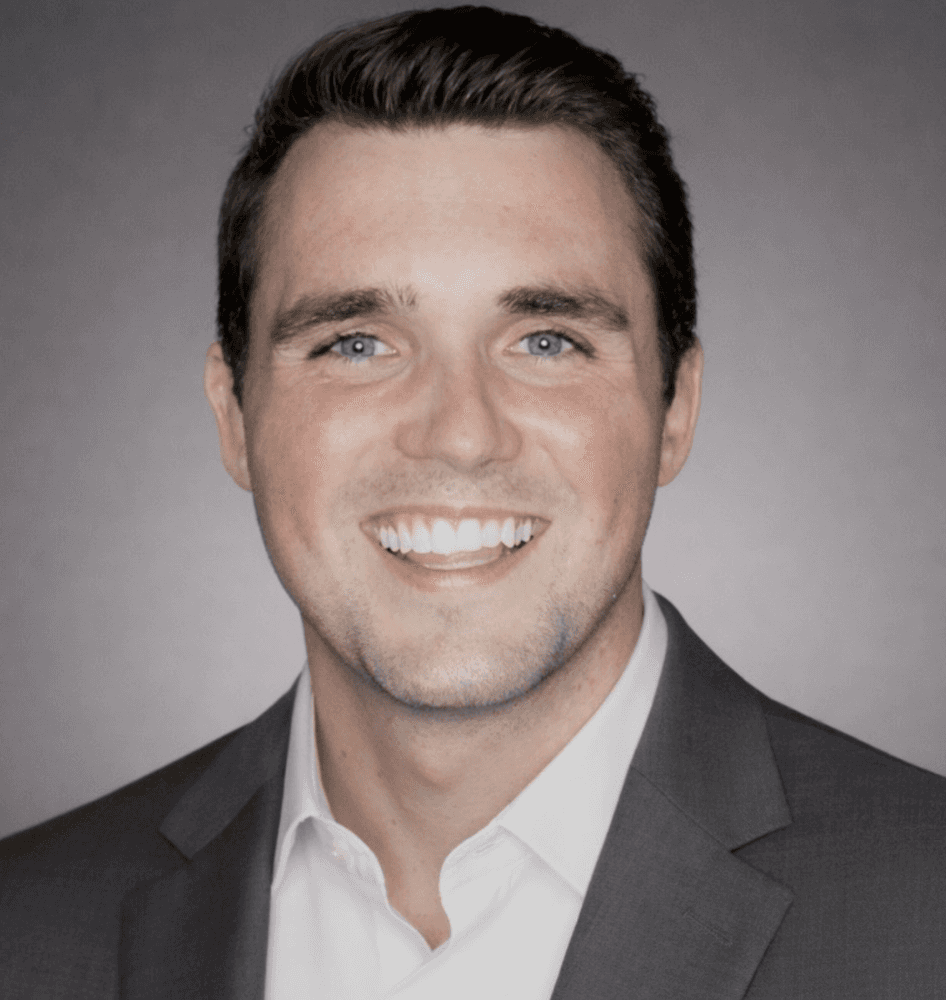
We chatted with Connor Grant, MD, a Chief Resident in Emergency Medicine at Stanford University and incoming Innovation and Design Fellow in Stanford's Department of Emergency Medicine. The two-year fellowship will focus on industry partnerships, the Stanford Biodesign program, and expanding AI integration across Stanford Healthcare. Connor completed medical school at UC San Diego, and has spent his early career bridging the gap between clinical medicine and the innovation space!
First up: "What advice would you have for a current resident who wants to get into tech, but doesn't know where to start?"
Connor started by vetting companies for an angel investment group, looking through pitch decks to learn what the process looks like. A lot of the ideas were incredible, but the roadmap just didn't make sense because clinicians weren't engaged in building it.
That's what drew him in: trying to match the right solution to the right problem. Healthcare is ripe with problems, and the most successful products will break things down into something smaller, and actually improve efficiency.
From there Connor got involved in groups centered around physicians interested in innovation. Proximity to the Bay Area only helped – where there are a lot of people thinking about how to do things better, faculty at Stanford doing this work, mentors who opened doors to consulting opportunities.
Connor shared that it really comes down to not being afraid to reach out and say, "What you're doing is really cool, how can I get involved?" In most academic institutions, those people exist but you have to do the work to find them. At first, you may have to be willing to do things for free, to get paid for it later.
And then we asked: "Do you think healthcare and innovation can keep pace with each other, or will there always be a gap?"
Connor shared that there's a lot of inertia in actually implementing innovation, and much of that is rooted in caution, because clinicians and administrators are dealing with human lives.
Products that offset administrative burden are a great gateway. Administrative burden directly impacts physician burnout, and if we can show people how AI can augment what they're already doing, without touching patient care directly, they build trust in AI and technology as a whole. Once we do that, the question becomes: "Okay, how else can we expand this?"
As Connor steps into his fellowship this year, it’s clear that he’s not just watching this expansion and AI innovation happen, but he’s leading the way for his institution, peers, and the healthcare industry as a whole.
Wrapping up this week’s edition (and our personal best), here’s our Triage leaderboard section. We’ll cover 4-5 topics weekly that were interesting to know but not interesting enough to make our flagship stories. Just trying to keep everyone as in-the-loop as possible. It’s a thankless job, really!
TRIAGE LEADERBOARD
NVIDIA is going quantum, and working with healthcare robotics companies: NVIDIA launched Ising, the world's first open-source AI model family for quantum computing — joining its existing portfolio that includes Isaac GR00T for robotics and Cosmos for physical AI. Translation: AI is becoming the control plane for every emerging compute paradigm, and the same playbook NVIDIA used to dominate AI is now aimed at quantum error correction.
The first pancreatic cancer breakthrough in nearly 20 years: The FDA fast-tracked expanded access for daraxonrasib (Revolution Medicines) A RAS inhibitor that nearly doubled survival vs. chemo (13.2 vs. 6.7 months) in the Phase 3 RASolute 302 trial. NDA submission is queued under the Commissioner's National Priority Voucher pilot, with full approval potentially close behind.
The first AI robotic spinal fusion on the West Coast happens at UC San Diego: UC San Diego Health became the first West Coast health system to perform spinal fusion using a fully integrated AI + imaging + robotics platform, with patient-specific implants planned by AI before incision. Two-year data from the Scoliosis Research Society shows custom AI-planned implants meaningfully reduce repeat surgeries.
The Utah Medical Board vs. Errrybody: Well, not everybody. But, the state. Doctronic. AI. Feels like everybody. The Utah Medical Licensing Board called for immediate suspension of the state's Doctronic pilot which is the first state-approved AI prescription refill program in the US. They’re stating on the record that they were never consulted before launch. Utah's Office of AI Policy declined to suspend, noting the 12-month pilot is in Phase 1 (100% physician review of every refill) and that they're building the regulatory framework in parallel.
That’s a wrap. Till next week. Probably. 😬
Xoxo,
Holly H.’s ghost writer (a real human)
ShiftOS builds Holly, an AI workforce coordinator for shift-based teams — healthcare, hospitality, retail, and logistics. Less chasing schedules, more running the business. Interested in a demo? Book time to see Holly in action here.
Building agents that will change the workforce forever.
ShiftOS, Inc © 2026. All rights reserved.
Products
Resources